
Short-term relief from persistent muscular tension and discomfort.
Focused pressure, carefully applied
Deep tissue massage in the City of London.
Slow, deliberate treatment for persistent muscular tension, restricted movement and areas that feel difficult to release.
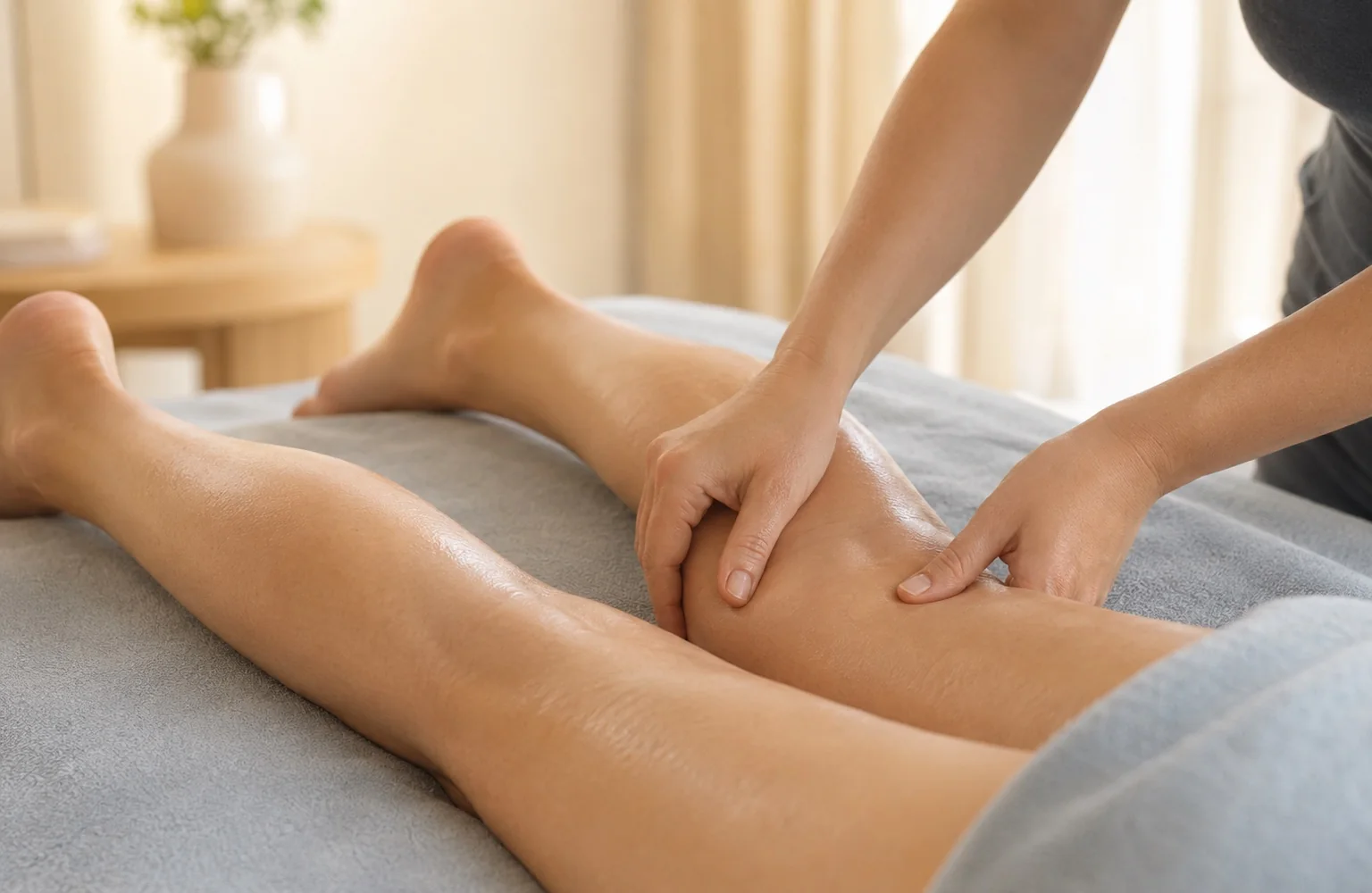
Treatment focus
Deeper layersFirm pressure is useful only when it is precise, appropriate and accepted by the client.
SlowFocusedTherapeutic
What is deep tissue massage?
Working beneath the surface, without chasing pain.
Deep tissue massage uses slow strokes, sustained compression and carefully directed pressure to work with deeper layers of muscle and the connective tissue around them. It is often chosen for persistent tightness, recurrent “knots”, overworked muscles or stiffness that has not settled with lighter treatment.
The therapist may use fingers, thumbs, hands, forearms or elbows, depending on the area and the amount of control required. Pressure can be moderate or firm, but it should be adjusted continuously to your comfort and response. Deep tissue massage does not need to feel extreme to be effective.
SlowDeliberate strokes allow the therapist to work accurately.
SpecificTreatment focuses on the areas most relevant to your symptoms.
ResponsivePressure is adapted throughout the session.
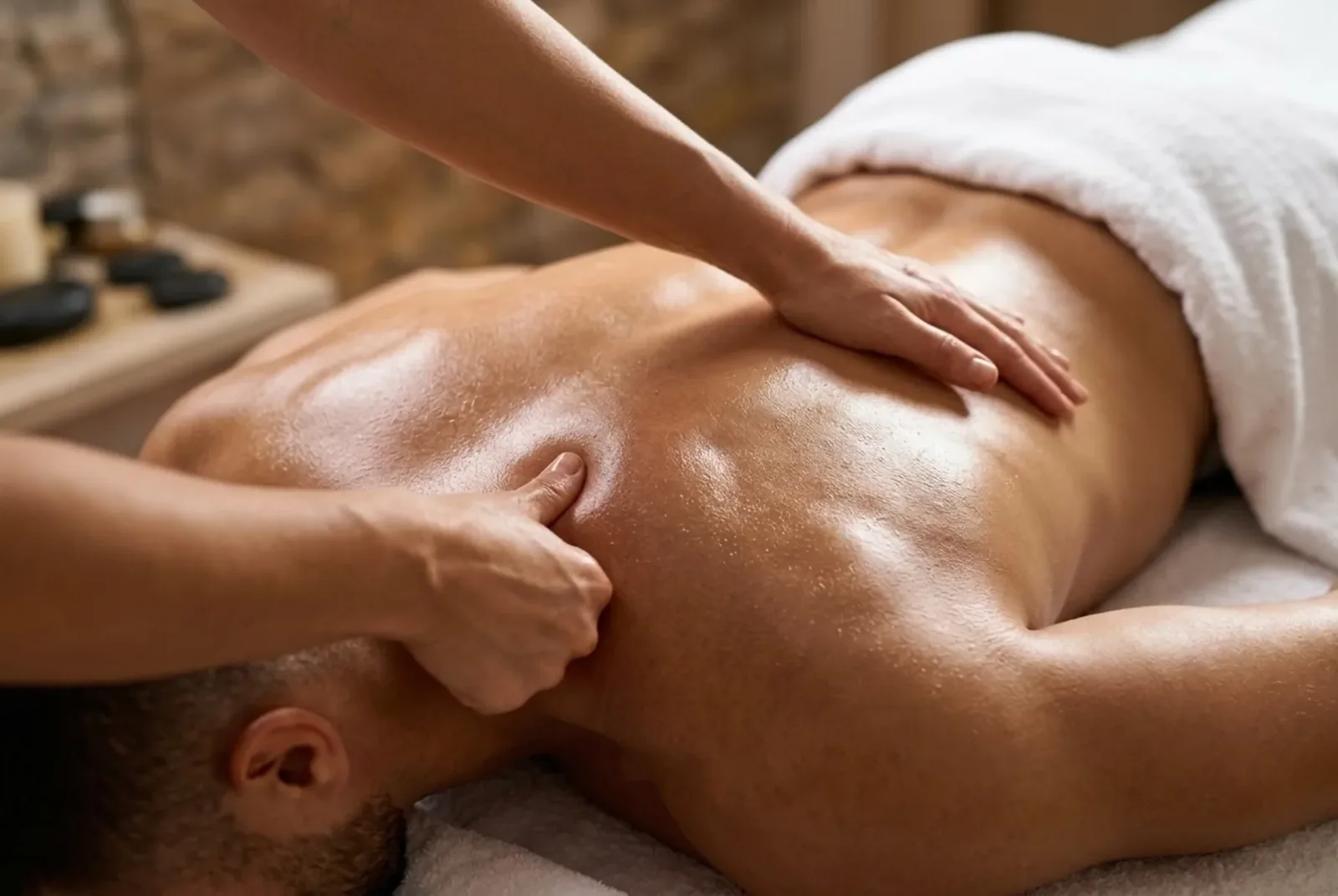
Your session
A precise treatment, not simply more pressure.
Your therapist will first discuss what feels restricted, what activities aggravate it and how much pressure you normally tolerate. Treatment may then combine several techniques rather than relying on one continuous level of force.
Slow glidingControlled strokes through larger muscle groups.
Sustained compressionSpecific pressure held and gradually adjusted.
Trigger-point workFocused attention to sensitive, tense areas.
Forearm techniquesBroad, stable pressure with good control.
StretchingMovement used to support ease and range.
Myofascial workSlow techniques for surrounding soft tissue.
Firm does not mean painful.
Some tenderness can occur when a sensitive area is treated, but sharp, burning, electric or intolerable pain is a reason to reduce pressure or change technique immediately.
Potential benefits
What deep tissue massage may help with.
The response varies from person to person. Benefits are usually most useful when treatment is combined with appropriate movement, exercise and recovery habits.
Reduced feelings of stiffness and guarding in overworked areas.
Support for flexibility and comfortable range of movement.
Recovery support after training, repetitive work or physical activity.
Relaxation and a greater sense of ease in tense muscle groups.
Improved postural comfort when combined with movement and strengthening.
What does the research say?
Useful evidence, with realistic expectations.
Research rarely tests “deep tissue massage” as one standardised technique, so the evidence usually relates to manual massage more broadly. It suggests possible short-term benefits in selected situations, while reinforcing that massage is not a substitute for diagnosis, rehabilitation or exercise.
Non-specific low-back pain
A Cochrane review found short-term improvements in pain and function in some comparisons, but the evidence was rated low or very low quality. The authors had little confidence in the estimates and found no clear long-term benefit.
Furlan et al., 2015 ↗Exercise recovery and flexibility
A review of sports massage found no evidence of direct improvements in strength, sprinting, endurance or performance. Small improvements were reported for flexibility and delayed-onset muscle soreness.
Davis, Alabed and Chico, 2020 ↗Before treatment
Tell us what your body is telling you.
Let your therapist know about recent injuries, surgery, unexplained swelling, medication, pregnancy or any medical condition that may affect treatment. Severe, sudden or unexplained pain should be medically assessed before massage.
Pressure is collaborative
You are encouraged to speak up at any point. The therapist can reduce, redirect or stop a technique immediately.
Some temporary tenderness is possible
A treated area may feel sensitive afterwards. This should be manageable and should not feel like a new injury.
Movement still matters
For recurring problems, massage is usually most useful alongside gradual movement, strength work and suitable professional advice.
A considered approach
Depth with purpose, not pressure for its own sake.
Deep tissue massage can be a useful option for persistent muscular tension, stiffness and recovery when the treatment is specific, comfortable and matched to your needs. The best session is not necessarily the strongest—it is the one that helps you move and feel better without overwhelming the tissues.
Massage is not a diagnosis or a replacement for medical care. Seek urgent medical help for serious injury, chest pain, sudden weakness, loss of bladder or bowel control, or other concerning symptoms.
References
Evidence and further reading.
01
Furlan, A.D., Giraldo, M., Baskwill, A., Irvin, E. and Imamura, M. (2015) ‘Massage for low-back pain’, Cochrane Database of Systematic Reviews, Issue 9, Art. No. CD001929. Available at: https://doi.org/10.1002/14651858.CD001929.pub3.
02
Davis, H.L., Alabed, S. and Chico, T.J.A. (2020) ‘Effect of sports massage on performance and recovery: a systematic review and meta-analysis’, BMJ Open Sport & Exercise Medicine, 6(1), e000614. Available at: https://doi.org/10.1136/bmjsem-2019-000614.
03
Weerapong, P., Hume, P.A. and Kolt, G.S. (2005) ‘The mechanisms of massage and effects on performance, muscle recovery and injury prevention’, Sports Medicine, 35(3), pp. 235–256. Available at: https://doi.org/10.2165/00007256-200535030-00004.
Ready to begin?
Choose the time your body needs.
Book the appointment length that suits you. Your therapist will discuss the pressure, areas of focus and the most appropriate techniques before treatment begins.
Common questions
Deep tissue massage questions, answered plainly.
Is deep tissue massage supposed to hurt?
No. Depth and pain are not the same thing. Effective deep work is slow and specific, applied at a pressure you can stay relaxed under. If you are holding your breath or tensing away from the pressure, it is too much, and the treatment usually becomes less effective rather than more.
How is it different from a regular massage?
The pace and the intent. Deep tissue work moves more slowly, stays longer in one area and targets specific structures rather than covering the whole body. A relaxation massage is broader and lighter. Neither is better; they are aimed at different outcomes.
How long will I be sore afterwards?
Any soreness is usually mild and settles within 24 to 48 hours. It tends to feel like the ache after unfamiliar exercise rather than sharp pain. Soreness beyond two days, or pain that worsens rather than eases, suggests the pressure was heavier than it needed to be.
How long should the session be?
Forty-five minutes suits one or two areas such as the neck and shoulders or the lower back. Sixty minutes is the usual choice where more than one region needs attention, since deep work takes time to be worth doing. Seventy-five and ninety minutes suit full-body treatment or several stubborn areas.