

Consistently five-star rated · 900+ client reviews · Central London

Focused treatment for the places that hold you back

Remedial massage in the City of London.

A personalised approach to painful, tense or restricted muscles and other soft tissues — adapted to your symptoms, comfort and goals.

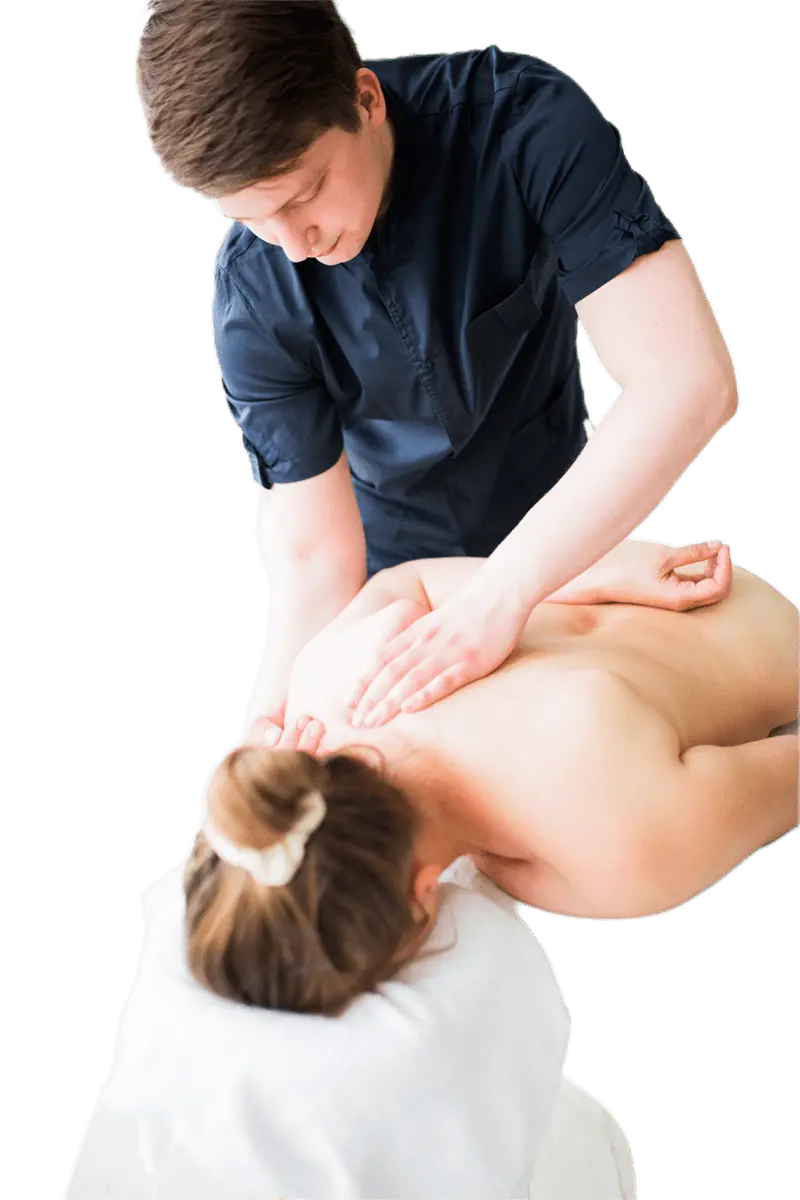
Therapist applying a focused remedial massage technique
Assessment-led · Person-centred · Adapted to you

What’s remedial?

Remedial
“Affording remedy; tending to remedy something.”

Thesaurus

CorrectiveTherapeutic

Definition adapted from Dictionary.com.

What is remedial massage?

Treatment shaped around the problem.

Remedial massage is a focused treatment designed to address painful, tense or restricted muscles and other soft tissues. Unlike a general relaxation massage, each treatment is adapted to the client’s symptoms and may focus on concerns such as neck and shoulder tension, back discomfort, muscle spasms, overuse or restricted movement (Healthdirect Australia, 2025).

The aim is not simply to apply more pressure. It is to select the most appropriate techniques, work at a level that suits the condition, and help the body move and feel more comfortably.

Therapist assessing neck and shoulder movement before treatment

Your session

Precise techniques, without unnecessary pain.

A session may include kneading, compression, trigger-point therapy, stretching, myofascial techniques and either gentle or firm pressure. Remedial massage does not need to be extremely deep or painful—the pressure should always be appropriate for the condition and comfortable for the client.

KneadingRhythmic soft-tissue work
CompressionControlled pressure and release
Trigger pointsFocused work on sensitive areas
StretchingSupport for easier movement
Myofascial workAttention to tissue restriction
Adapted pressureGentle or firm, as appropriate

What does the research say?

Useful evidence, with the right perspective.

Research suggests potential benefits in some situations, while also showing why massage is often most useful as part of a broader plan rather than as a stand-alone answer.

Case series4 participants

Chronic tension-type headache

A small case series involving four people with chronic tension-type headaches reported reductions in headache frequency and headache-related disability following remedial massage. The authors suggested that treating muscles around the front of the neck, jaw and head may provide additional benefit, although larger studies are required before firm conclusions can be made.

Shields and Smith, 2020 ↗
Randomised trial80 participants

Nonspecific shoulder pain

An Australian randomised controlled trial involving 80 people with nonspecific shoulder pain compared exercise alone with exercise combined with soft-tissue massage. Adding massage did not produce better outcomes than exercise alone, highlighting that hands-on treatment is often most useful as part of a wider plan that may include movement and strengthening.

van den Dolder, Ferreira and Refshauge, 2015 ↗

Potential benefits

What remedial massage may help with.

01

Reduce muscular tension and discomfort.

02

Improve joint mobility and ease restricted movement.

03

Relax muscle spasms and sensitive areas.

04

Support recovery following physical activity.

05

Temporarily relieve some forms of neck, shoulder or back pain.

06

Promote relaxation and general wellbeing.

A considered approach

Personalised treatment, supported by movement.

Overall, remedial massage offers a personalised approach to managing muscular tension and discomfort and may be especially helpful when combined with regular movement, exercise and appropriate medical advice.

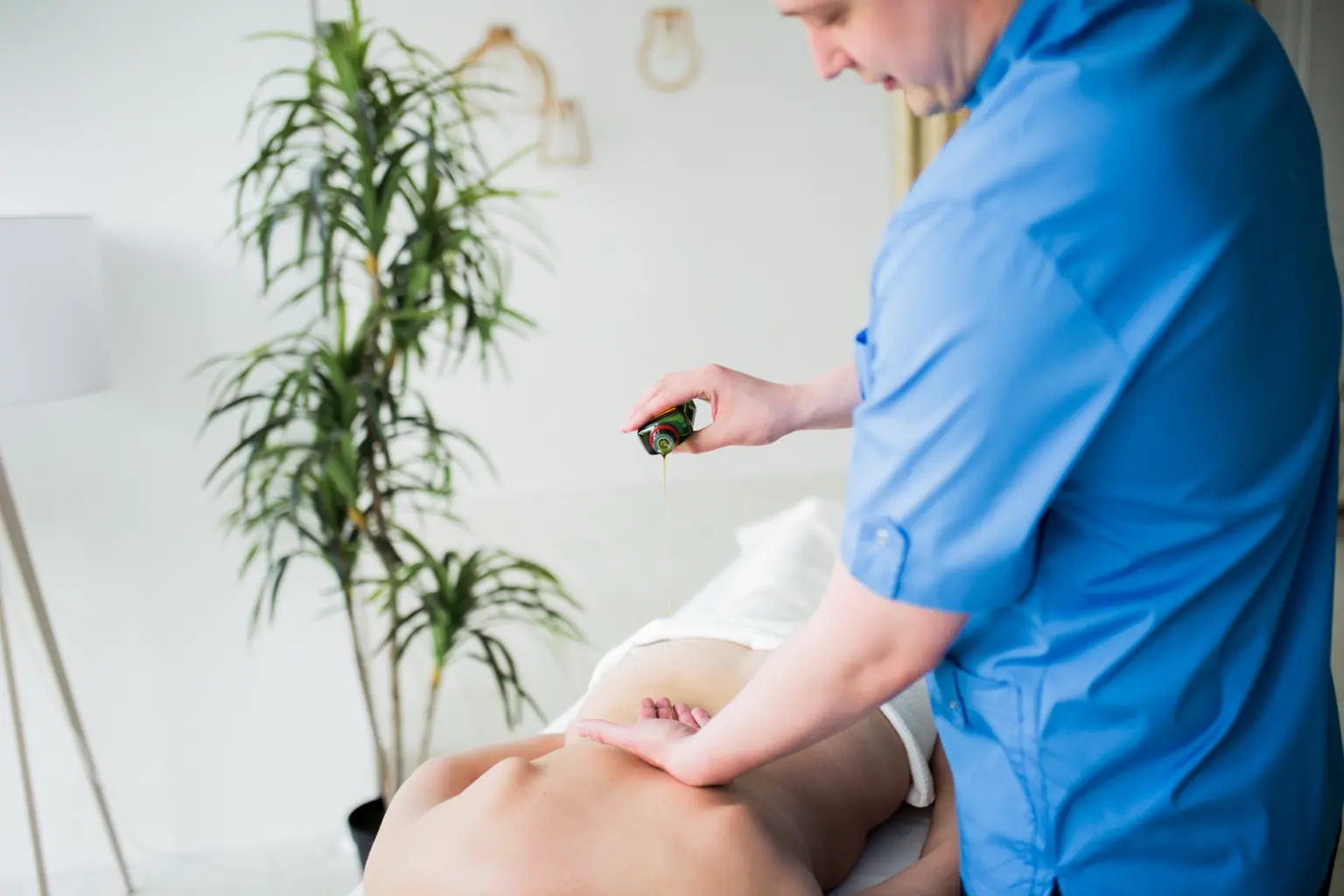
Calm remedial massage treatment in a professional therapy room

References

Evidence and further reading.

01

Healthdirect Australia (2025) ‘Remedial massage’. Available at: Healthdirect Australia (Accessed: 19 July 2026).

02

Shields, G.E. and Smith, J.M. (2020) ‘Remedial massage therapy interventions including and excluding sternocleidomastoid, scalene, temporalis and masseter muscles for chronic tension type headaches: A case series’, International Journal of Therapeutic Massage & Bodywork, 13(1), pp. 22–31. Available at: https://doi.org/10.3822/ijtmb.v13i1.445.

03

van den Dolder, P.A., Ferreira, P.H. and Refshauge, K.M. (2015) ‘Effectiveness of soft tissue massage for nonspecific shoulder pain: Randomized controlled trial’, Physical Therapy, 95(11), pp. 1467–1477. Available at: https://doi.org/10.2522/ptj.20140350.

Ready to begin?

Tell us what is troubling you.

Choose the appointment length that suits you. Your therapist will discuss your symptoms, assess what is needed and shape the session around you.

Common questions

Remedial massage questions, answered plainly.

What is the difference between remedial and sports massage?

The techniques overlap heavily; the emphasis differs. Remedial massage is organised around a specific complaint — where it hurts, what makes it worse, how it limits you. Sports massage is organised around activity and training load. In practice the same therapist may use much of the same toolkit for both.

How many sessions will I need?

Most people notice a change within one to three sessions. Longstanding problems often need a short course alongside changes to activity or exercise. If several sessions pass with no meaningful change, that is a reason to reconsider the approach or seek further assessment rather than simply continuing.

Should remedial massage be painful?

No. Treatment can feel firm and sometimes tender in an irritable area, but it should stay within a level you can breathe through and talk during. Pressure is adjusted throughout, and pain that makes you brace tends to work against the result rather than towards it.

How should I feel afterwards?

Commonly looser and slightly tired, sometimes with mild soreness for a day or so, similar to after unfamiliar exercise. Drinking normally, moving gently and avoiding a hard training session on the same day usually helps. Sharp or escalating pain afterwards is not expected and is worth telling us about.