01
Targeted massage
Pressure and strokes are adjusted to work with tense muscles without relying on unnecessary pain.
Less forcing. More balance, awareness and easier movement
A personalised combination of remedial, sports and deep tissue techniques, supported by stretching and exercise advice to address the muscular patterns that can influence posture.
What is postural massage?
Treatment shaped around movement patternsPosture is not a single perfect position. The aim is to reduce unnecessary tension and help movement feel easier, rather than forcing the body into a rigid shape.
A combined approach
Postural massage combines elements of remedial massage, sports massage and deep tissue work. The therapist looks at areas that feel shortened, overloaded, sensitive or underused and adapts the treatment to your individual pattern. The main aim is not to create a “perfect” posture, but to reduce tension, improve comfortable mobility and help you become more aware of how you sit, stand and move.
A session may also include assisted stretching, joint mobilisation, myofascial techniques and simple exercise advice. Because posture is influenced by habits, strength, mobility, work setup, stress and activity, hands-on treatment is usually most useful as part of a wider plan.
Forward-rolling shoulders
When the shoulders roll forwards, the pectoralis major and pectoralis minor at the front of the chest may feel shortened or tense. These tissues can contribute to pulling the shoulders forwards, so treatment may include careful work across the chest and front of the shoulders.
The session may also address the muscles around the shoulder blades, including the rhomboids, trapezius and rotator-cuff muscles. Some may feel overloaded and tight, while others may benefit from more activation and endurance. Massage can help reduce sensitivity and improve movement, while exercise helps the body use the available range more effectively.
Your treatment
Pressure and strokes are adjusted to work with tense muscles without relying on unnecessary pain.
Slower, sustained work may be used where soft tissues feel restricted or less mobile.
The therapist supports gentle stretches for the chest, shoulders, neck or hips when appropriate.
Small, controlled movements may help the upper back, shoulders and neck feel less stiff.
Breathing strategies can help reduce bracing and encourage easier movement through the ribcage.
Simple stretches, strengthening or workplace changes may be suggested to support the treatment.
Movement after massage
A wall angel is one example of a low-load exercise that may help activate the muscles around the shoulder blades while encouraging chest and shoulder mobility. It should be adapted to your current range rather than forced. You do not need to flatten every part of the body against the wall, and the movement should remain comfortable.
Depending on your needs, your therapist may also suggest chest stretches, thoracic-extension work, rowing or scapular-control exercises. The best plan is usually the one that is simple enough to repeat consistently.
Stand with the upper back supported by a wall, feet slightly forward and ribs relaxed.
Slide the arms upwards and downwards slowly without forcing the wrists or elbows to touch the wall.
Stop if the exercise causes pain, numbness or pinching, and ask for an individual alternative.
What does the research say?
The evidence is encouraging but mixed, which supports a combined approach rather than relying on massage alone.
A review of 38 trials found that manual therapy may reduce forward-head posture and thoracic kyphosis in the short to medium term. It did not reliably improve shoulder posture and was not clearly superior to other treatments (Santos et al., 2022).
In 28 healthy participants, soft-tissue mobilisation and self-stretching of the pectoralis minor reduced rounded-shoulder posture compared with a control treatment, with the change still present two weeks later (Wong et al., 2010).
A review of 22 studies found that therapeutic exercise programmes improved forward-head posture, rounded shoulders and thoracic kyphosis. Programmes commonly combined strengthening, stretching and shoulder-focused exercises (Sepehri et al., 2024).
Treatment examples
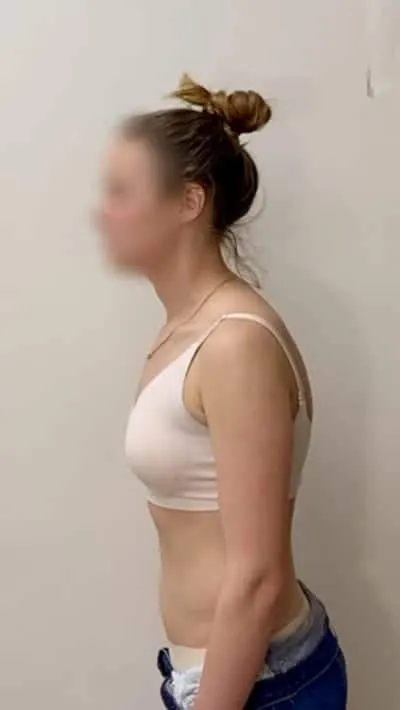
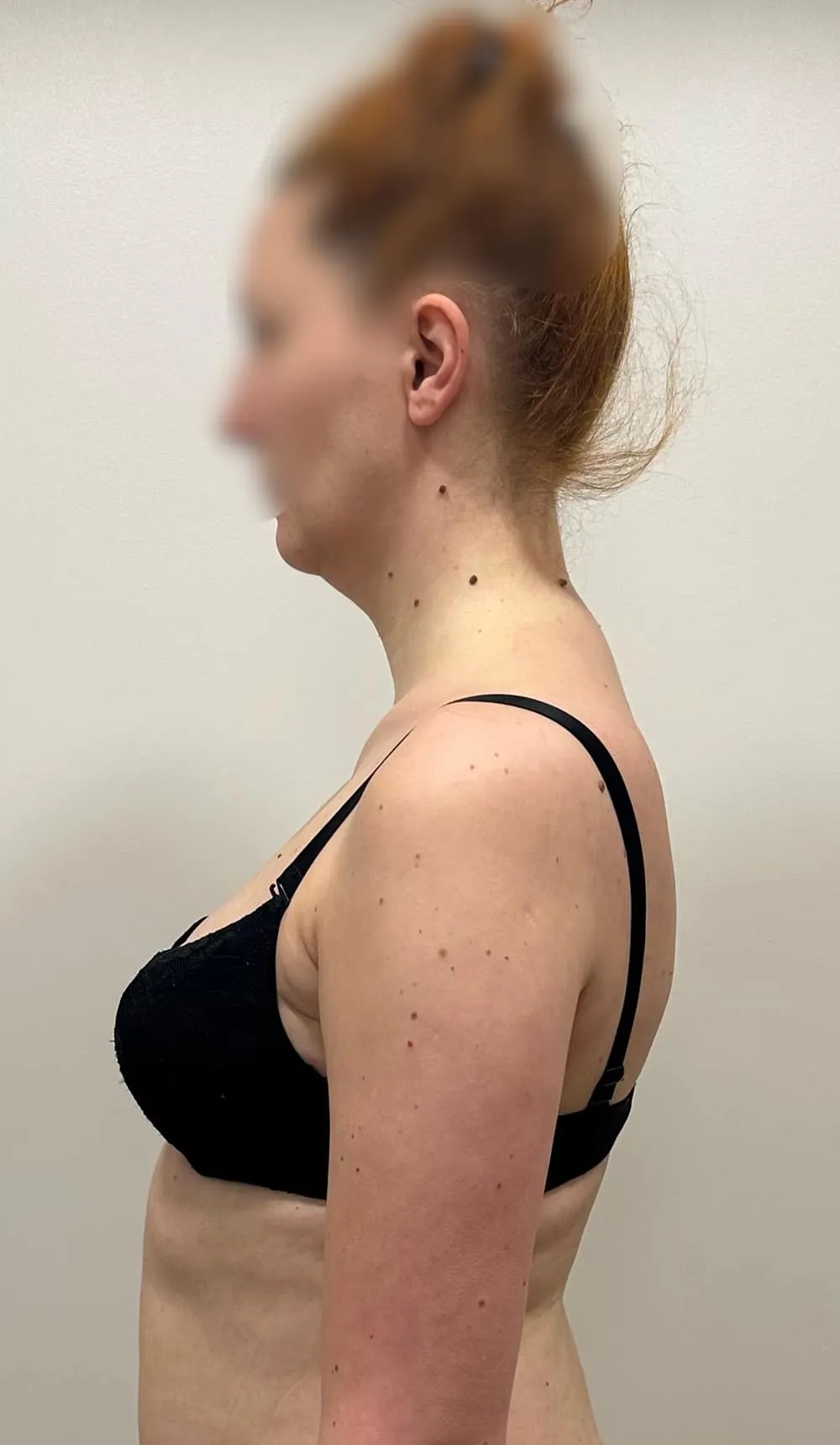
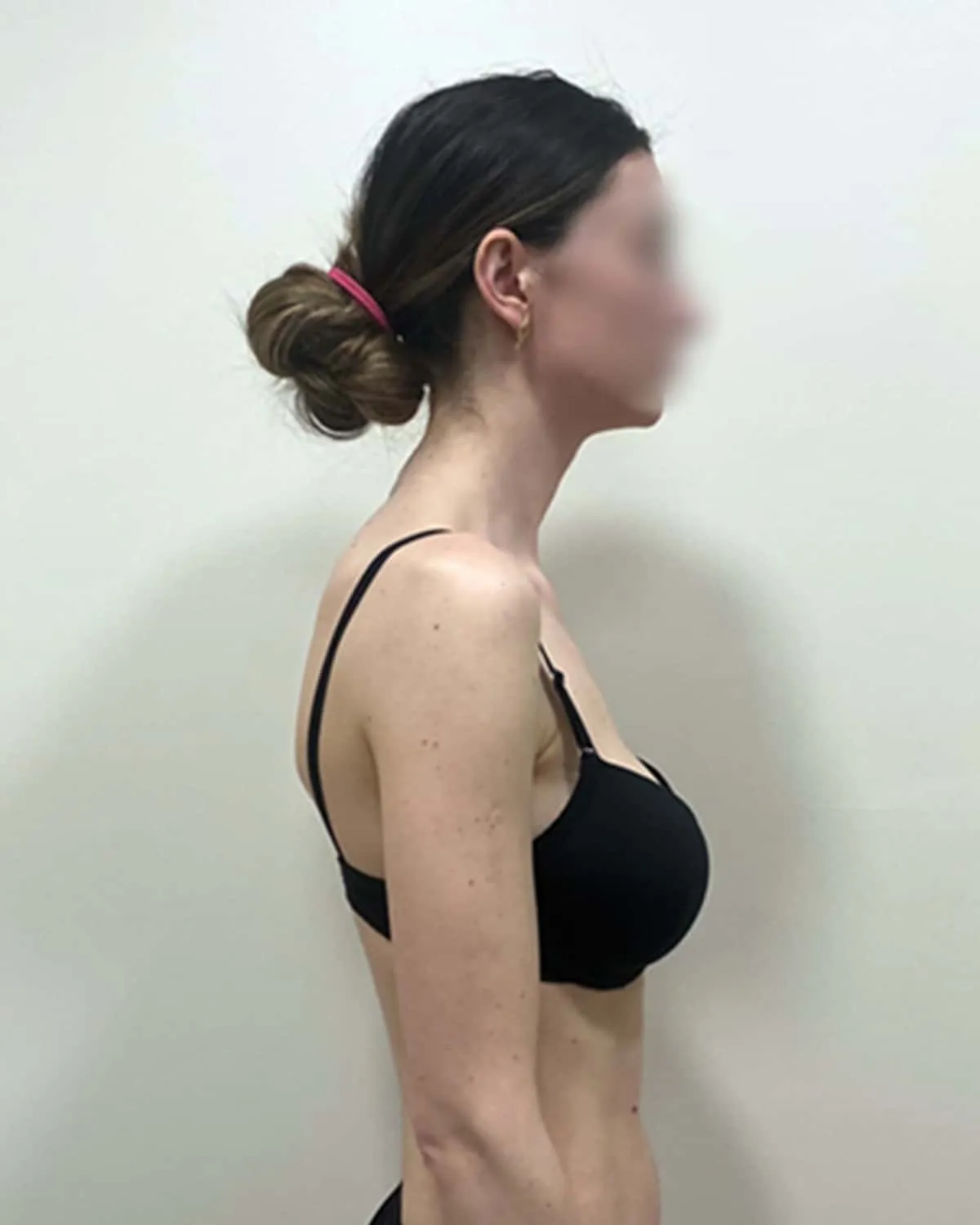
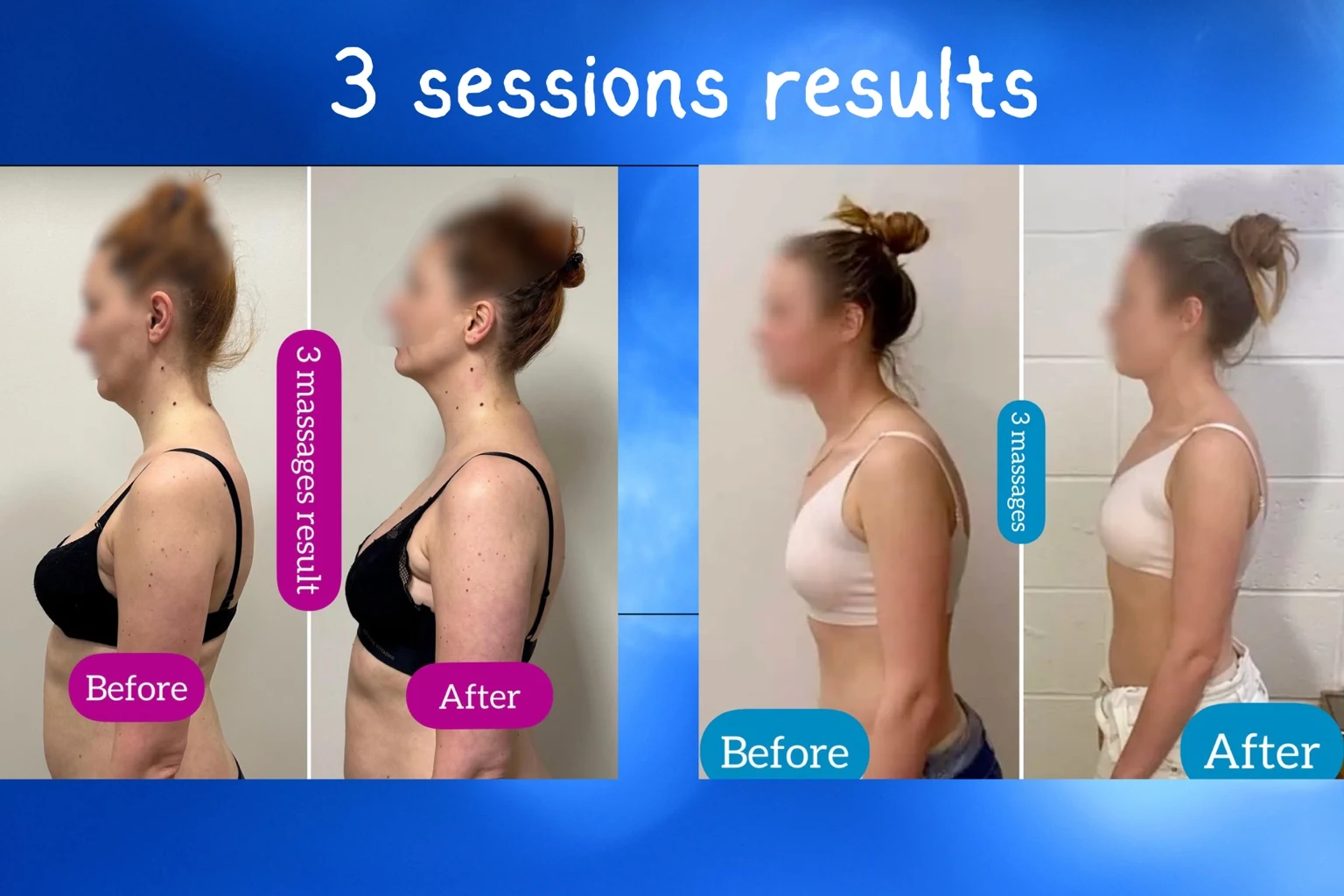
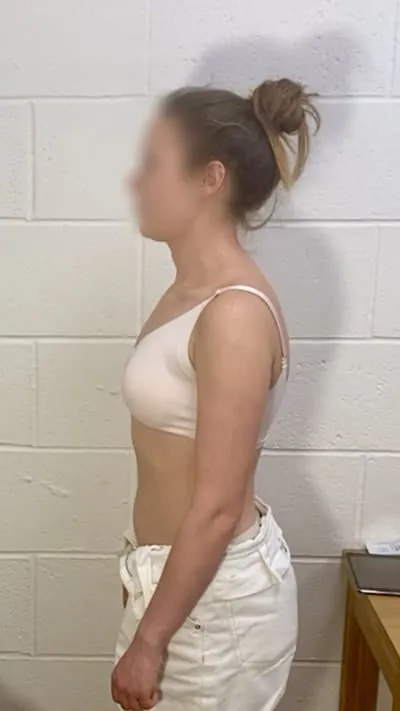
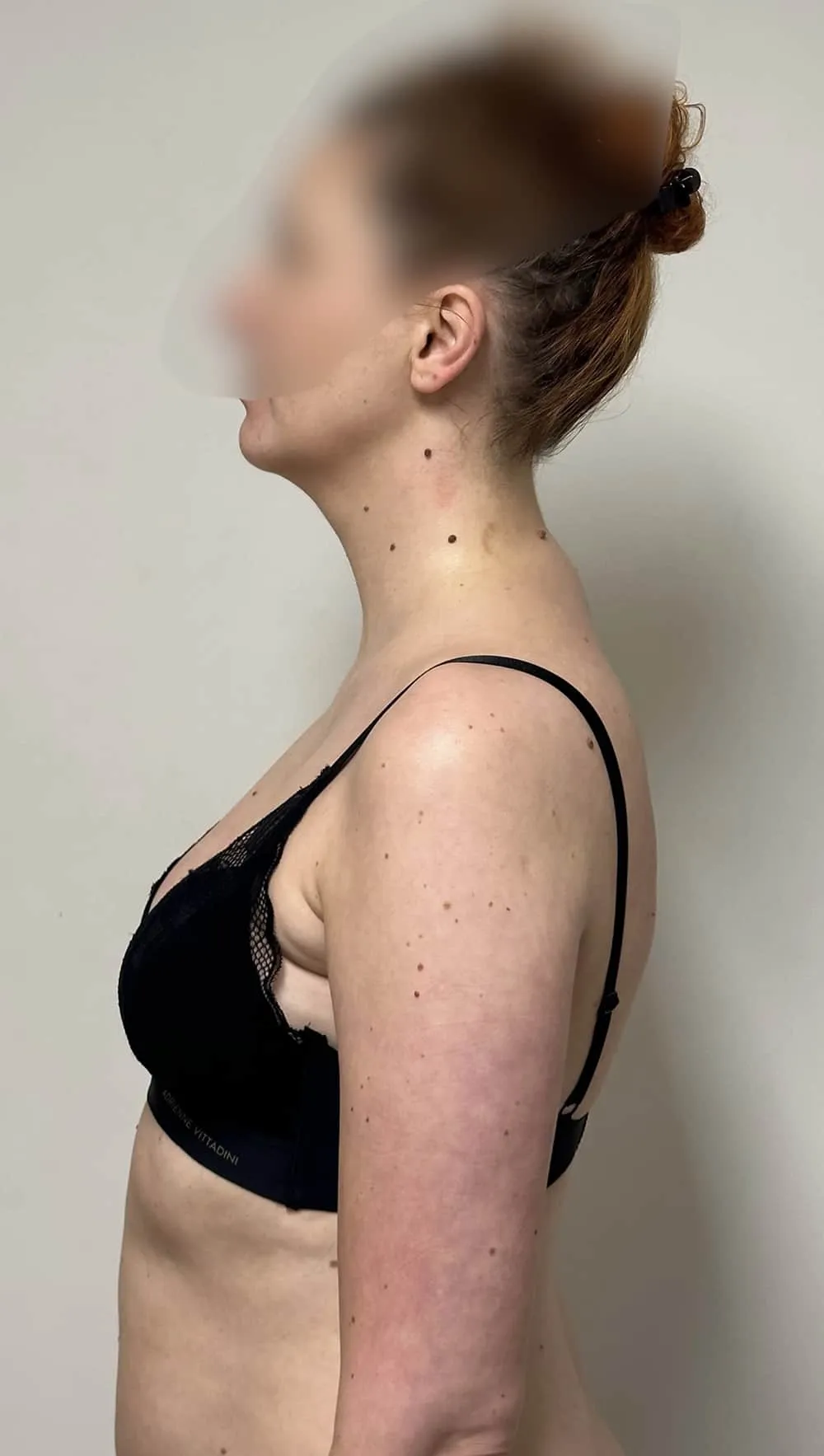
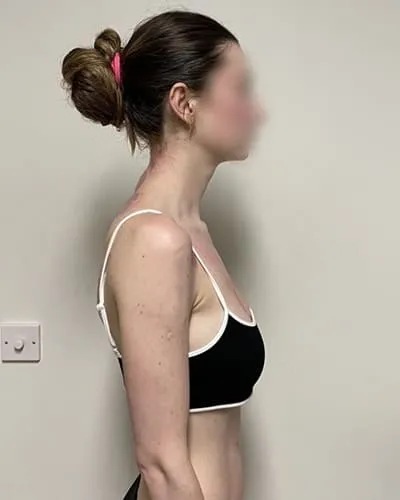
Drag the handle across each photograph to compare the client’s posture before and after a course of three massage treatments.
Before massage
Move the slider to see the comparison
 BeforeAfter
After massage
Before massage
Move the slider to see the comparison
 BeforeAfter
After massage
Before massage
Move the slider to see the comparison
 BeforeAfter
After massage
Photographs show individual examples and are not a guarantee of identical outcomes. Results vary according to each person, their symptoms, daily habits and treatment plan.
Overall
Postural massage offers a personalised way to work with muscular tension, stiffness and movement habits. It may be especially useful for forward-rolling shoulders, upper-back tension and discomfort associated with prolonged sitting or repetitive positions.
The best results usually come from combining hands-on treatment with regular movement, appropriate strengthening, realistic workstation changes and medical advice when symptoms are persistent or worsening.
References