
Quadriceps
These four muscles at the front of the thigh join through the quadriceps tendon at the kneecap, while the patellar ligament then connects the kneecap to the tibia. Tightness or sensitivity may affect comfortable knee bending.
Sports massage for knee pain · City of London
A targeted treatment that may help when knee discomfort is influenced by muscular tension, restricted flexibility or overuse — for athletes and non-athletes alike.
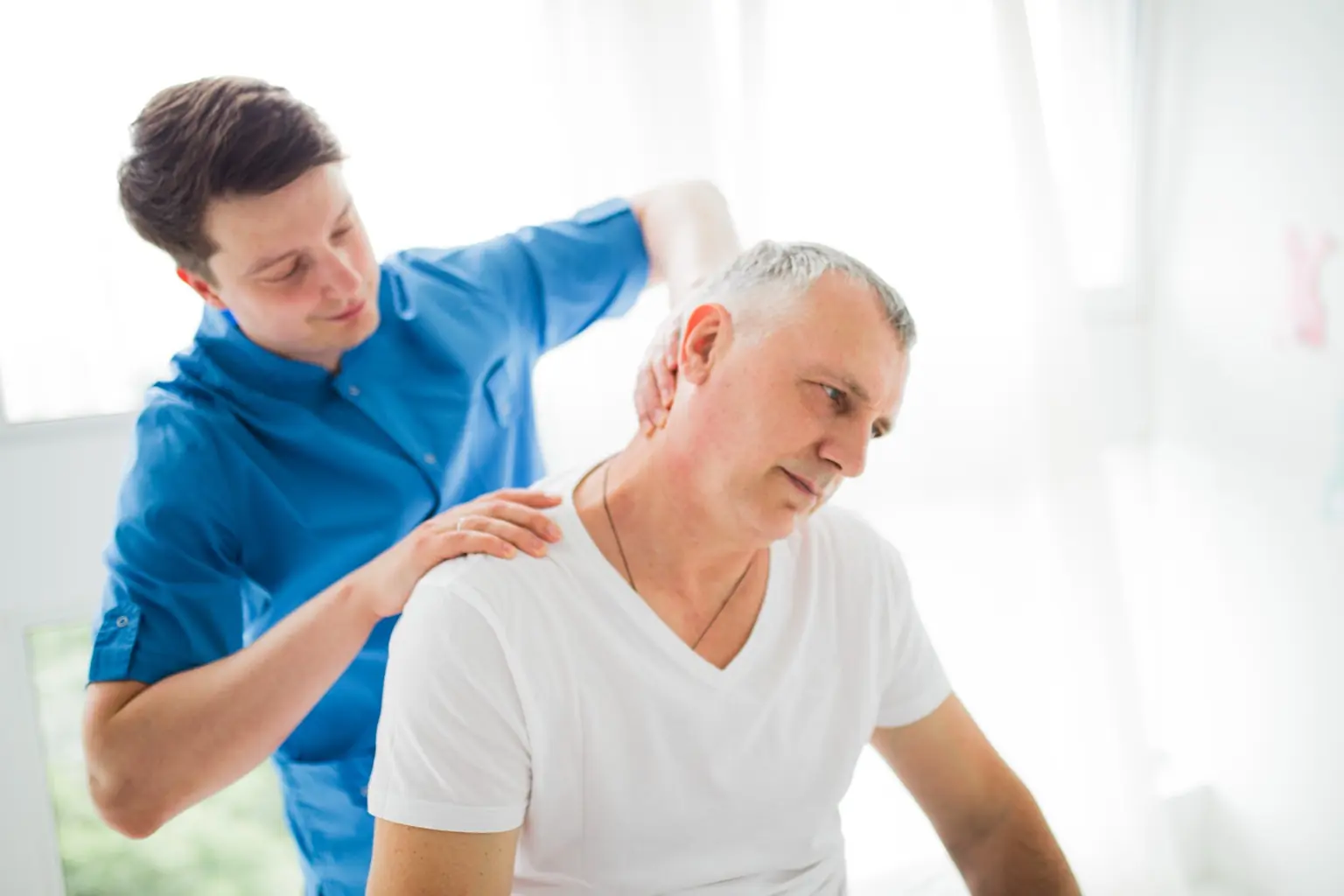
Sports Massage for Knee Pain and Stiffness
Sports massage is a targeted treatment that may help when knee discomfort is influenced by muscular tension, restricted flexibility or overuse. It is not only for athletes: it may also benefit people whose knees feel stiff after walking, exercise, prolonged sitting or repetitive activity.
Knee pain can be complex. Symptoms may arise from the joint capsule, cartilage, ligaments, tendons, patellar tracking or referred pain from the hip or lower back. Massage cannot repair structural injuries, but it may provide short-term relief when tight or sensitive muscles are contributing to discomfort.
Muscles around the knee
Treatment may include several connected muscle groups around the knee, using compression, slow strokes, myofascial work and assisted stretching. Pressure should be adapted carefully, particularly behind the knee, where important nerves and blood vessels are located.
The goal is not simply to massage the painful spot, but to understand where tension and stiffness may be limiting comfortable movement through the whole leg.
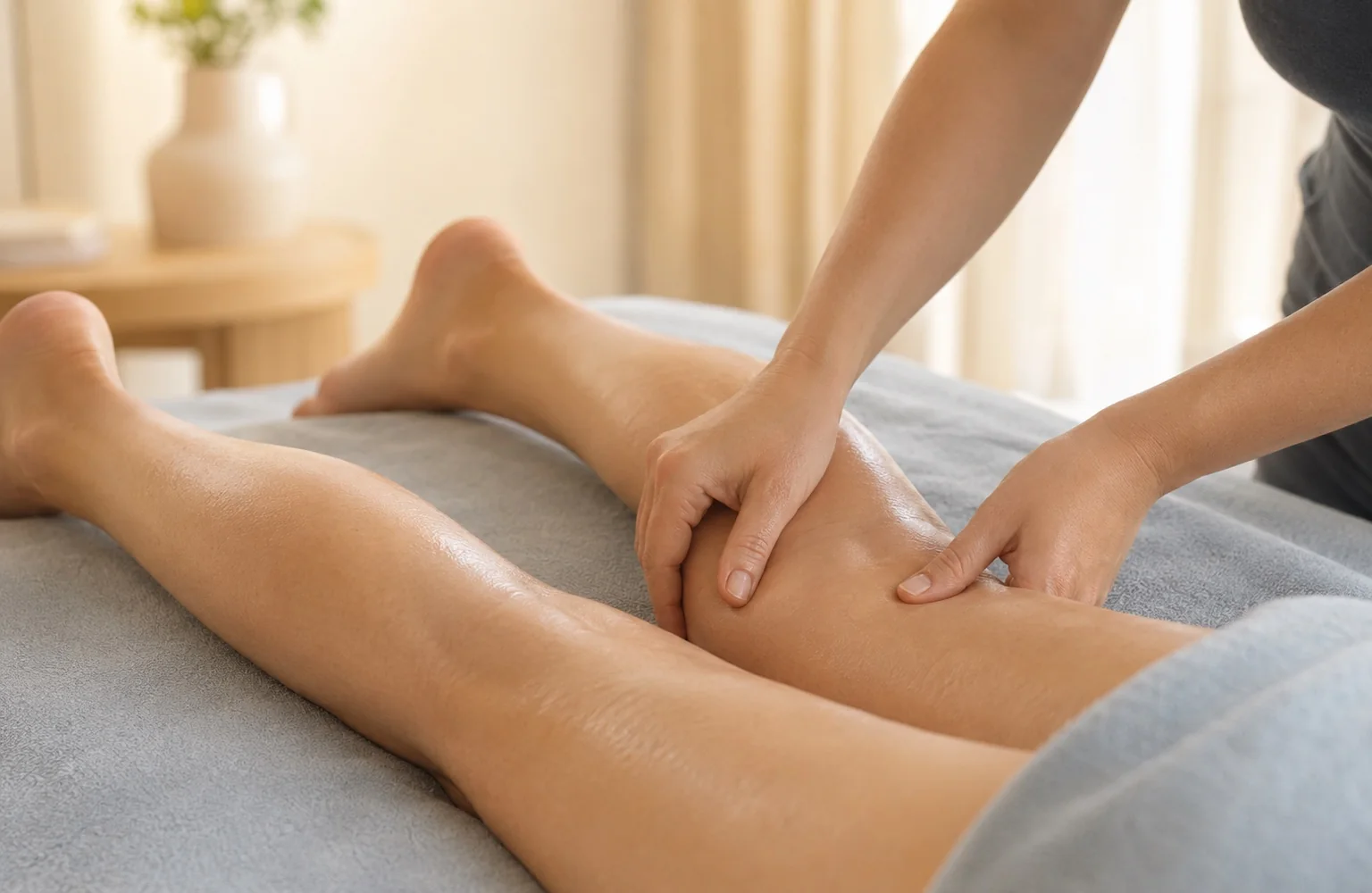
Connected muscle groups
These four muscles at the front of the thigh join through the quadriceps tendon at the kneecap, while the patellar ligament then connects the kneecap to the tibia. Tightness or sensitivity may affect comfortable knee bending.
These muscles cross the back of the knee and attach around the inner and outer sides of the lower leg. They help bend the knee and control movement.
The main calf muscle originates from the femur just above the back of the knee. Tension here may contribute to discomfort when walking, running or straightening the leg.
These muscles influence leg alignment and how forces are managed through the knee, so treatment may also include the outer hip and gluteal region when relevant.
Muscle energy technique
Muscle energy technique, or MET, is an active technique in which you gently contract a muscle against the therapist’s resistance for several seconds before relaxing. The therapist may then guide the limb into a slightly greater, comfortable range.
It can be used with the quadriceps, hamstrings or calf muscles to support flexibility and ease of movement. A 2025 randomised trial involving 54 older adults with knee osteoarthritis found that both MET and mobilisation with movement improved pain, knee movement, balance and lower-limb strength over time, although mobilisation produced greater improvements in some measures (Komalasari, Vongsirinavarat and Nilmart, 2025).
What does the research say?
A large randomised clinical trial found that weekly massage provided short-term symptom relief for people with knee osteoarthritis. However, this evidence relates specifically to osteoarthritis and does not mean massage will treat every cause of knee pain (Perlman et al., 2019).
Both muscle energy technique and mobilisation with movement improved pain, knee movement, balance and lower-limb strength over time in older adults with knee osteoarthritis, though mobilisation performed better in some measures.
Massage is usually most helpful when combined with suitable stretching, gradual strengthening and activity advice rather than being relied on as a stand-alone treatment.
Overall
Massage is usually most helpful when combined with suitable stretching, gradual strengthening and activity advice. It can help settle overloaded tissues and make exercise feel easier to tolerate.
If symptoms include sudden swelling, locking, instability, severe pain or problems after an injury, medical assessment is important.
References