
01
Reduce muscular tension and tenderness.
Massage for neck pain · City of London
A focused treatment for muscular tension, stiffness and limited movement — working not only with the neck, but also the shoulders, upper back, chest and scalp to support more comfortable motion and general relaxation.
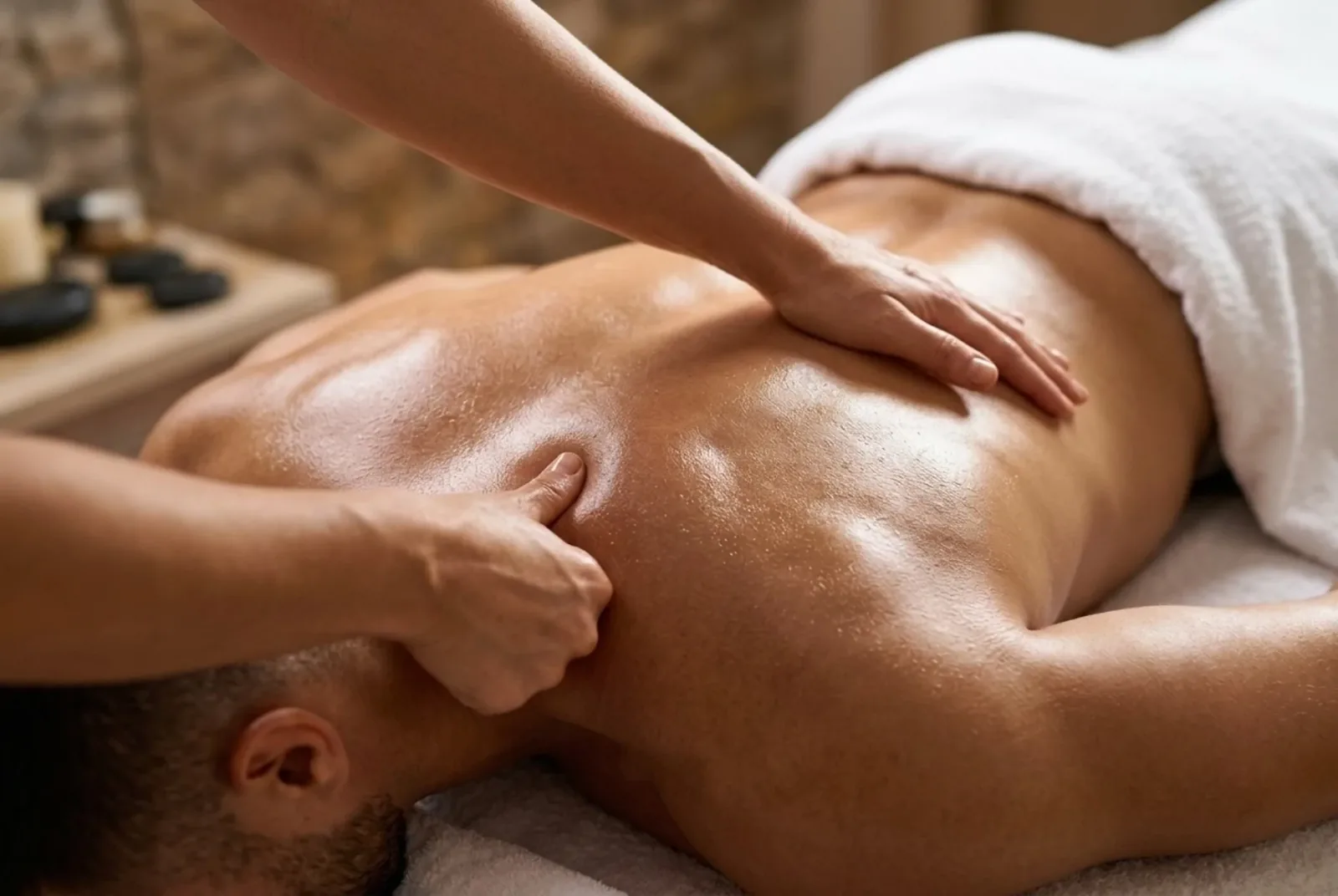
Therapeutic Massage for Neck Pain
Therapeutic massage for neck pain is a focused treatment for muscular tension, stiffness and restricted movement. Rather than treating only the painful area, the therapist may work with the neck, shoulders, upper back, chest and scalp because these regions function together and influence how comfortably the head and upper spine move (Mete et al., 2023).
Particular attention may be given to the suboccipital muscles — the small muscles where the upper neck meets the base of the skull — as well as the upper trapezius and muscles surrounding the shoulder blades. Working with these tissues may help reduce the feeling of tightness, improve comfortable movement and create a general relaxing effect.
The upper back, ribs and breathing
The upper back is an important part of neck treatment. Reduced movement through the thoracic spine may increase the demand placed on the neck. Treatment may therefore include massage around the upper back and rib muscles, combined with gentle thoracic mobility and breathing exercises.
This may allow the ribcage to move more comfortably and make deeper breathing feel easier. A small randomised trial found that upper-thoracic mobilisation combined with mobility exercise improved short-term neck pain, cervical extension and disability in people with forward-head posture (Cho, Lee and Lee, 2017).

Potential benefits
Reduce muscular tension and tenderness.
Provide short-term relief from some forms of neck pain.
Improve comfortable neck, shoulder and upper-back movement.
Ease tension around the base of the skull and scalp.
Encourage freer thoracic and rib movement.
Promote relaxation, reduce stress-related muscle guarding, and make stretching or mobility exercises easier.
What does the research say?
A systematic review found that myofascial release and connective-tissue massage may improve neck pain in the short term. Massage was not consistently better than other active treatments, so it may be most useful when combined with exercise and movement advice (Mete et al., 2023).
Available evidence suggests that some massage approaches may help with short-term neck-pain outcomes, especially when the treatment is individualised and combined with active strategies.
Upper-thoracic mobilisation plus mobility exercise improved short-term neck pain, cervical extension and disability, supporting the idea that the neck often benefits when the upper back and ribs are treated as part of the same functional region.
Neck-related headaches
Neck dysfunction can contribute to a cervicogenic headache — a headache arising from structures in the neck and often accompanied by reduced neck movement. A review of 20 trials found that manual and exercise therapies may reduce headache intensity, frequency and disability.
However, many studies had limitations, and the strongest evidence related to mobilisation or manipulation rather than massage alone (Bini et al., 2022). Massage may still play a useful supportive role by reducing surrounding muscular tension and improving comfort.
After treatment
After treatment, your therapist may recommend gentle neck stretches, thoracic mobility exercises, breathing practice and regular movement breaks. These can support the effects of treatment and make everyday movement feel easier.
Sudden severe headache, rapidly worsening pain, weakness, numbness or symptoms following trauma require medical assessment.
Overall
Therapeutic massage for neck pain can be a valuable way to reduce tension, improve comfort and support freer movement through the neck, shoulders and upper back.
It is often most helpful when paired with movement, breathing and simple exercise advice tailored to the client.
References
Common questions
Often, yes, in the short term. Research supports massage for reducing neck pain intensity and improving comfort, particularly when it is combined with movement and changes to how long you stay in one position. It works best as part of a wider approach rather than on its own.
Tension in the upper neck and the base of the skull can refer pain into the head, a pattern often described as cervicogenic headache. Treatment addressing the neck and upper back has been shown to help this type of headache, though headaches have many causes and persistent ones should be assessed medically.
Many people notice a change in comfort and movement immediately after a session. Whether it holds depends on what is driving it: if the same positions and loads continue unchanged, the tension tends to return. Regular movement between sessions is usually what makes the difference last.