
Compression and slow massage
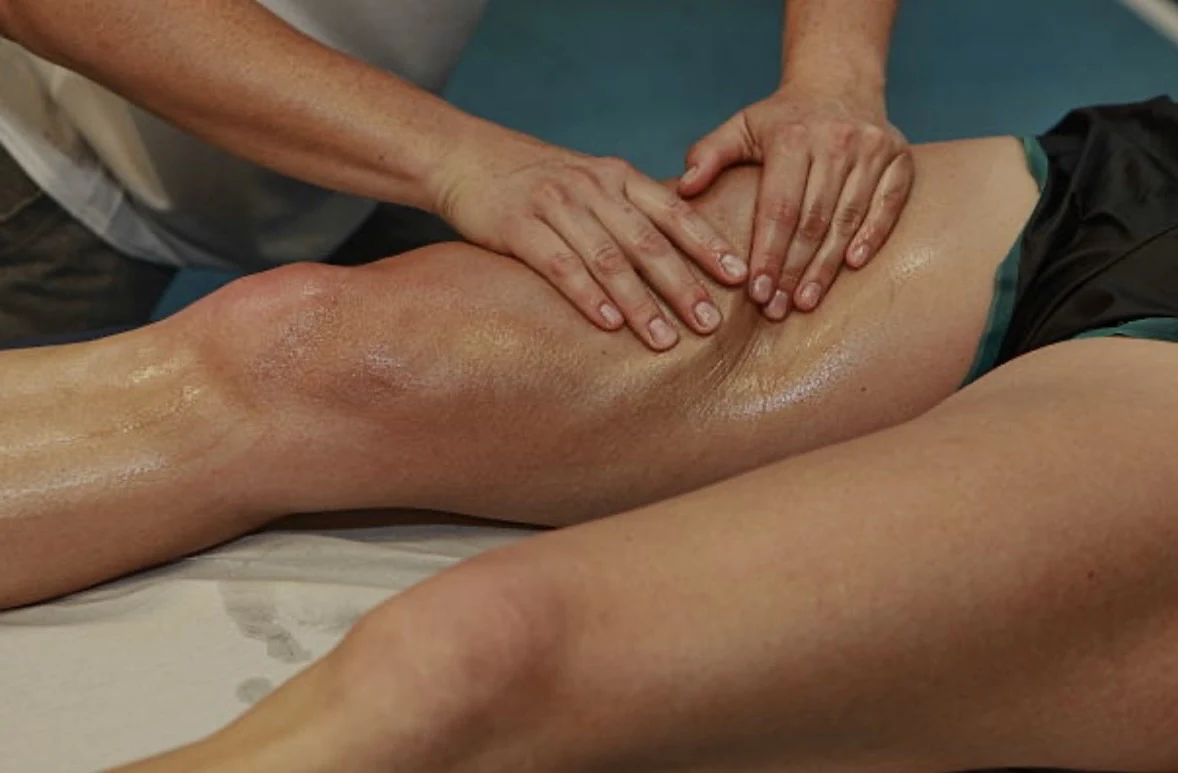
Used to work with sensitive or overloaded tissues and help reduce the feeling of tightness through the thigh, outer leg and calf.
Sports massage for leg pain · City of London
A personalised treatment for pain along the outside of the knee or the back of the thigh — supporting comfortable movement, recovery and rehabilitation.
Sports Massage for Leg Pain
Pain along the outside of the knee or back of the thigh can affect walking, running, cycling and everyday movement. Two common concerns are iliotibial band syndrome and hamstring pain. Although these conditions are different, both benefit from an individual assessment because symptoms may involve muscular tension, training load, strength, movement patterns or an injury requiring rehabilitation.
Sports massage can help manage muscular tension and support comfortable movement, but it should be part of a wider plan when needed, rather than a stand-alone solution.
Iliotibial band syndrome
The iliotibial band, or ITB, is a strong band of connective tissue running along the outside of the thigh. ITB syndrome commonly causes pain around the outer knee, particularly during repetitive activities such as running.
Current research suggests that ITB syndrome is better understood as irritation caused by compression or impingement of sensitive tissues near the outside of the knee, rather than the ITB simply “rubbing” over the bone. The ITB itself is not a muscle and cannot simply be loosened or lengthened through massage.
Sports massage may instead address surrounding areas, including the tensor fasciae latae, gluteal muscles, quadriceps, hamstrings and calf. This can reduce perceived muscular tension and make movement or rehabilitation exercises feel more comfortable.
Hamstring pain and tightness
The hamstrings are three muscles running along the back of the thigh. They help extend the hip, bend the knee and control the leg during walking and running.
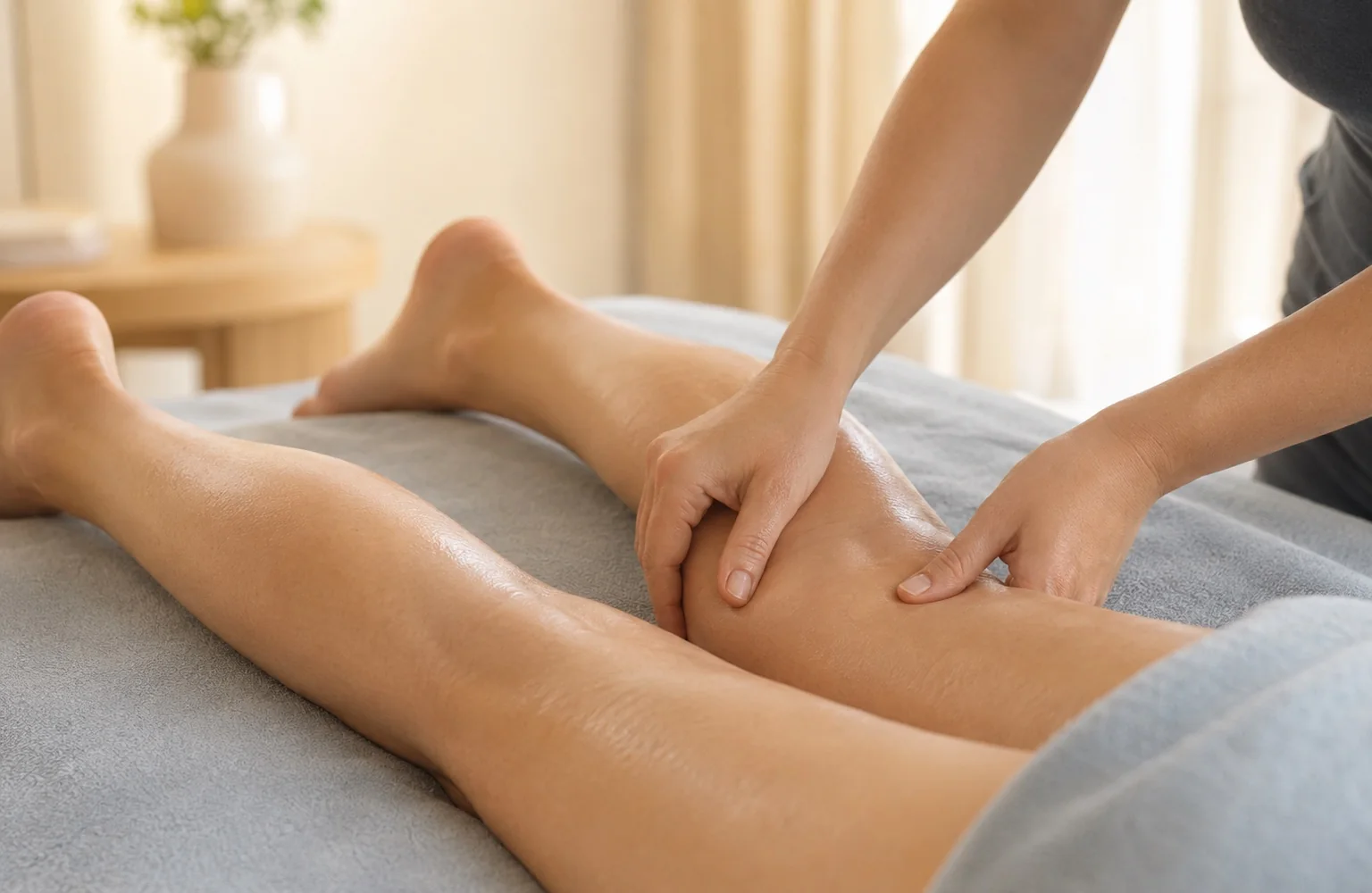
Treatment may include compression, slow massage, myofascial techniques and assisted stretching. Muscle energy or PNF techniques may also be used: you gently contract the hamstrings against the therapist’s resistance before relaxing into a comfortable stretch.
What treatment may include
Used to work with sensitive or overloaded tissues and help reduce the feeling of tightness through the thigh, outer leg and calf.
Can be used around the lateral thigh, gluteals and posterior chain to help tissues feel less restricted and movement more comfortable.
Gentle therapist-supported stretching may help improve comfortable range, particularly where stiffness is limiting movement.
You gently contract the hamstrings against resistance, then relax into a comfortable stretch to support flexibility and body awareness.
What does the research say?
A systematic review of 29 studies involving 1,012 participants found that sports massage produced small improvements in flexibility and delayed-onset muscle soreness, although it did not directly improve strength, speed or endurance performance (Davis, Alabed and Chico, 2020).
Sports massage showed small improvements in flexibility and post-exercise soreness, which can be useful when stiffness or tissue sensitivity is limiting comfortable movement.
For ITB syndrome, a 2024 systematic review found that strengthening — particularly exercises for the hip abductors — was a common and useful part of treatment. Manual therapy may help as an addition, but should not replace exercise, activity modification or running advice (Sanchez-Alvarado et al., 2024).
Overall
Treatment can help make strengthening and mobility exercises easier, reduce post-exercise soreness and support perceived recovery, particularly when symptoms are influenced by tight or sensitive surrounding tissues.
Persistent or worsening symptoms should be professionally assessed so that rehabilitation and exercise guidance can be tailored appropriately.
References